
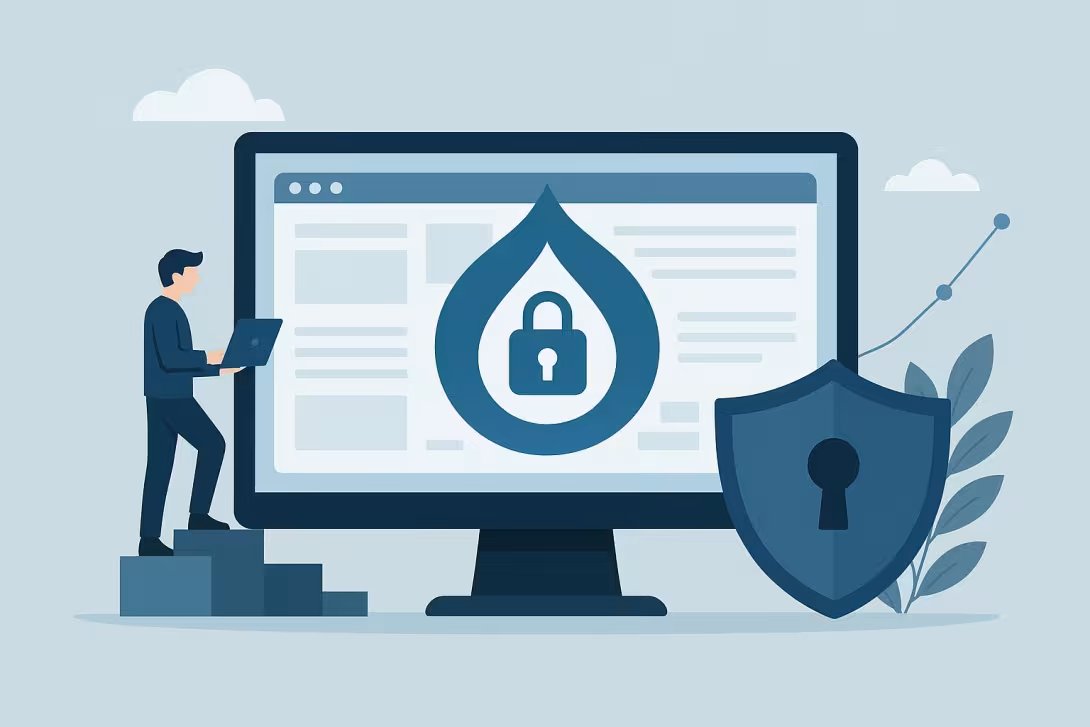
In today’s digital landscape, the importance of a secure and scalable website cannot be overstated. As businesses continue to evolve and grow, the demand for platforms that can adapt and protect sensitive information has become paramount. Among various content management systems available, Drupal stands out due to its robust architecture and extensive capabilities. In this article, we will explore strategies for building a secure and scalable website using Drupal, showcasing how organizations can leverage its features to enhance their online presence.
Understanding the Basics of Drupal
Drupal is an open-source content management framework that enables users to create a wide range of digital experiences—from simple blogs to complex enterprise applications. Its flexibility and modular architecture allow for customization through the installation of various extensions. This means that businesses can tailor their websites to meet specific needs, making Drupal an ideal choice for organizations looking for versatility and longevity in their web solutions.
Ensuring Security Through Best Practices
Security is a critical aspect of any online venture. For Drupal, maintaining a secure environment involves implementing several best practices. Firstly, always keep the core Drupal installation and all modules up to date. The community behind Drupal is vigilant in identifying and patching vulnerabilities; thus, regularly updating ensures protection against the latest threats.
Additionally, utilizing the security modules available within the Drupal ecosystem can further enhance your website's defenses. Modules such as the Security Kit provide valuable features such as Cross-Site Scripting (XSS) protection and Clickjacking prevention. Furthermore, reinforcing user permissions and roles within your website ensures that sensitive information is accessed only by authorized personnel. Adopting these approaches mitigates risks and fortifies the site's integrity.
Developing for Scalability
As businesses grow, their online needs evolve, demanding a website that can scale efficiently. Drupal's architecture is built to handle large volumes of traffic and content. One approach to ensure scalability is to employ proper caching mechanisms. Utilizing tools like Memcache or Redis can drastically improve performance by reducing database load, which is critical during high-traffic periods.
Another scalable practice involves database management. Choosing a hosting provider that specializes in Drupal hosting is crucial. These providers often offer optimized environments tailored for Drupal, enhancing load times and reliability. Additionally, considering a content delivery network (CDN) can distribute content globally, reducing latency and improving the user experience, regardless of the user’s geographic location.
The Role of Responsive Design
In today's mobile-first world, having a responsive design is essential for any website. Drupal offers several responsive themes and modules that allow your site to adapt to various screen sizes seamlessly. Not only does this improve user experience, but it is also a significant factor in search engine ranking algorithms. A website that is not mobile-friendly risks alienating a substantial portion of its audience.
Engaging a professional team, like Peak AI Design LLC, can streamline this process. Our experts understand the nuances of responsive design and can ensure that your Drupal site not only looks good on all devices but is also optimized for performance and security.
Monitoring and Maintaining Your Drupal Site
Even after your Drupal website is live, continuous monitoring is essential to maintain its security and performance. Employing analytics tools to track user behavior can provide insights into how the website is being used, allowing for data-driven decisions for future improvements. Regularly auditing your site for broken links, outdated modules, or any irregular activities will help keep it in top shape.
Moreover, a backup strategy is vital for disaster recovery. Ensuring that your website data is regularly backed up allows for quicker restoration in case of unexpected issues. Utilizing Drupal's backup and migration modules can simplify this task considerably.
Conclusion
Building a secure and scalable website with Drupal involves a combination of utilizing its extensive features, implementing best practices for security, and ensuring that the website can grow with your business. By focusing on these key areas, organizations can create a digital presence that not only meets current needs but is also future-proof.
If you are navigating the complexities of web development with Drupal, let Peak AI Design LLC assist you in creating a secure and scalable website tailored to your business goals. Contact us today for a free consultation and discover how we can elevate your online presence.
This article was published by Peak AI Design LLC — expert web development and AI integration for businesses ready to grow. Contact us for a free consultation.
Comments