
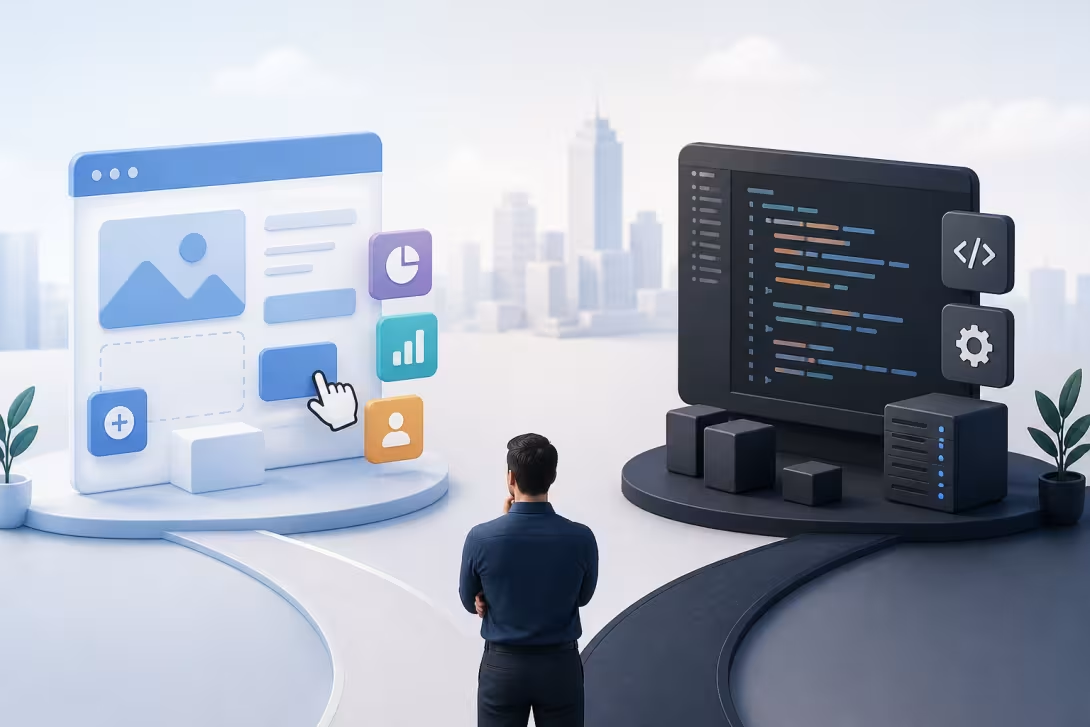
In the fast-paced world of business technology, choosing the right development approach can be a make-or-break decision. As companies evaluate their digital transformation strategies, two prominent methodologies arise: no-code/low-code platforms and custom development. Understanding the advantages and limitations of each is crucial for aligning technology with business objectives. This article will explore when to leverage no-code solutions, when to opt for custom development, and how Peak AI Design LLC can support you through these choices.
No-Code and Low-Code Platforms: An Overview
No-code and low-code platforms have gained immense popularity due to their ability to empower non-technical users to build applications without extensive programming knowledge. These platforms provide intuitive interfaces and pre-built functionalities that allow businesses to rapidly deploy solutions. Low-code platforms, while still user-friendly, may require some coding, making them suitable for users with a basic understanding of software development.
The appeal of these tools lies in their speed and affordability. With no-code and low-code solutions, businesses can quickly adapt to changing needs, iterate on existing processes, and deliver products to market faster than traditional development methods. This agility is particularly advantageous for small to medium-sized enterprises (SMEs) seeking to minimize overhead costs while maximizing efficiency.
When to Choose No-Code Solutions
No-code platforms are ideal for specific business scenarios. If you are looking to create simple applications—such as internal tools, landing pages, or data collection forms—these platforms typically excel. They are also beneficial for non-technical teams looking to prototype ideas quickly or for businesses wanting to test concepts with minimal investment.
Applications like Zapier or Airtable enable users to connect various web applications and automate workflows seamlessly. These functionalities can save significant time on mundane tasks and allow teams to focus on more strategic initiatives.
Furthermore, no-code tools are suitable for startups or companies with limited resources and tight deadlines that need to deploy solutions rapidly. By streamlining the development process, firms can pivot quickly and respond effectively to market demands, a critical success factor in today’s competitive landscape.
When to Opt for Custom Development
While no-code solutions have numerous advantages, they may not be appropriate for all scenarios. Businesses needing highly specialized applications that require intricate functionality are often better served by custom development. Custom solutions allow businesses to tailor applications to their unique requirements, ensuring that every feature contributes directly to their strategic goals.
For instance, if your business requires complex integrations with proprietary systems, advanced data handling, or bespoke feature sets, a custom solution is indispensable. Moreover, companies in regulated industries—such as finance and healthcare—often require strict compliance with security and data privacy regulations that no-code platforms might not fully support.
Custom development is also valuable for organizations seeking long-term scalability. As businesses grow, their needs evolve, and maintaining flexibility becomes vital. A custom-built application enables companies to easily scale their operations and adapt as necessary, ensuring consistency and performance over time.
Comparative Analysis: Cost, Time, and Maintenance
Cost considerations play a crucial role when deciding between no-code and custom development. Generally, no-code tools promise lower upfront costs since you can adopt a subscription model without needing a team of developers. However, hidden costs—like platform fees, limited features, or potential scalability issues—can arise as your needs expand.
On the other hand, custom development may entail higher initial investment but can yield long-term benefits through enhanced capabilities tailored to your business. When considering time to market, no-code solutions allow businesses to deploy applications almost instantly, while custom development typically requires more time and careful planning.
Maintenance is another factor: no-code solutions often require you to rely on third-party vendors for updates and support, while custom applications can be maintained internally or through a dedicated partner like Peak AI Design LLC, providing you greater control over your technology stack.
Conclusion
Choosing between no-code solutions and custom development depends on your business’s specific needs, available resources, and long-term goals. No-code platforms can serve as an excellent starting point for simpler projects or quick prototypes, whereas custom development is essential for complex, scalable solutions tailored to your unique business challenges.
At Peak AI Design LLC, we understand these intricacies and are here to guide you through the decision-making process. Our expertise in both no-code and custom development allows us to offer tailored solutions that align perfectly with your business objectives. If you're considering how to navigate these options, contact us for a free consultation today!
This article was published by Peak AI Design LLC — expert web development and AI integration for businesses ready to grow. Contact us for a free consultation.
Comments